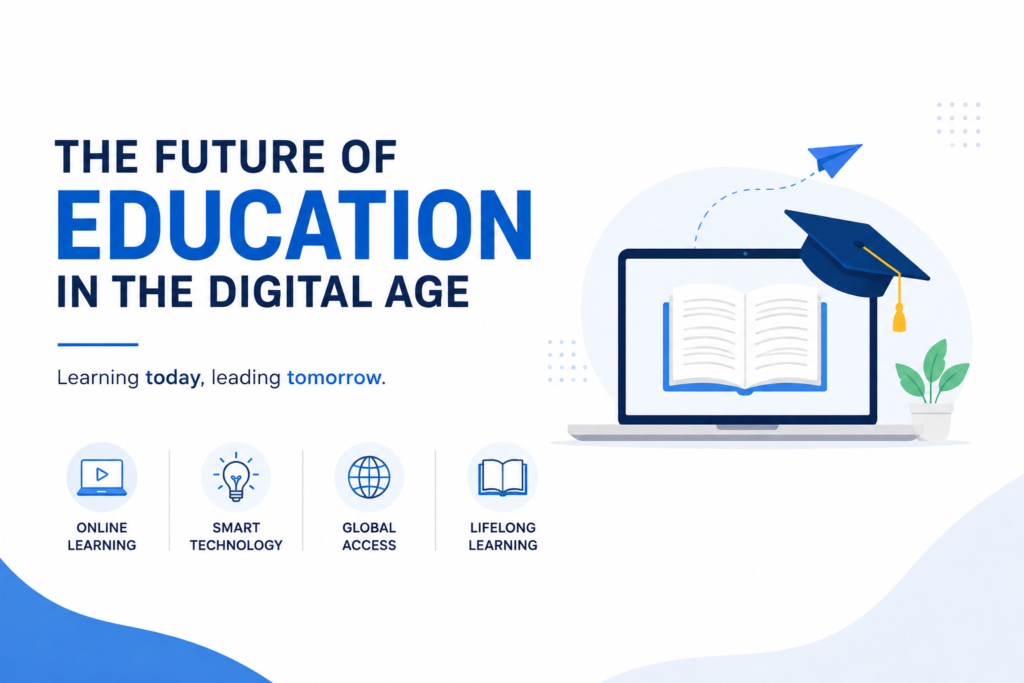
The Future of Education in the Digital Age
Education has always been a powerful tool for shaping individuals and transforming societies. However, the way we learn is changing rapidly. With the growth of technology, artificial intelligence, online learning, and digital tools, education is entering a new era. The future of education in the digital age is not simply about replacing books with screens—it is about creating smarter, more flexible, accessible, and personalized learning experiences.
 Technology Is Transforming the Classroom
Traditional classrooms are no longer the only place where meaningful learning happens. Students can now attend virtual classes, watch educational videos, use interactive learning platforms, and access information from almost anywhere.
Digital tools allow teachers to make lessons more engaging through animations, simulations, quizzes, presentations, and interactive activities. This can help students understand difficult concepts more easily and learn at their own pace.
 The Rise of Artificial Intelligence
Artificial intelligence is becoming an important part of modern education. AI-powered tools can help students practice subjects, receive instant feedback, identify areas where they need improvement, and explore topics according to their interests.
For teachers, AI can assist with lesson planning, creating learning materials, evaluating certain types of work, and understanding students’ learning needs.
However, technology should support teachers—not replace them. Human guidance, creativity, empathy, and mentorship will remain essential to education.
 Personalized Learning
Every student learns differently. Some understand concepts quickly, while others need additional explanation and practice. Digital education makes it possible to create more personalized learning experiences.
Adaptive learning platforms can adjust content according to a student’s progress. Instead of following exactly the same path, students can receive activities and resources that match their individual needs.
This approach can make learning more effective and help students become more confident and independent learners.
 Education Without Borders
One of the greatest advantages of digital education is accessibility. A student with an internet connection can access courses, lectures, educational videos, e-books, and resources from institutions and educators around the world.
Online education can provide opportunities for people who may not have access to traditional educational institutions because of location, time, financial limitations, or other circumstances.
The digital age has the potential to make education more inclusive—but only if we also address the digital divide and ensure that students have access to devices, internet connectivity, and digital skills.
 The Skills Students Will Need
The future workplace will require more than memorizing information. Students will need skills such as:
-
Critical thinking
-
Creativity and problem-solving
-
Communication
-
Collaboration
-
Digital literacy
-
Adaptability
-
Responsible use of technology
-
Lifelong learning
Schools and educational platforms will increasingly need to focus on helping students think, create, communicate, and solve problems, rather than simply remember facts.
 Teachers Will Remain Essential
Despite technological advancements, teachers will continue to play a central role in education. Technology can provide information, but teachers provide motivation, encouragement, understanding, and human connection.
The future classroom may therefore be a combination of technology and human interaction—a hybrid learning environment where teachers use digital tools to enhance their teaching while maintaining meaningful relationships with students.
 Challenges of Digital Education
The digital transformation of education also brings challenges. Excessive screen time, online distractions, misinformation, privacy concerns, unequal access to technology, and overdependence on digital tools are important issues that must be addressed.
Students also need to learn how to use technology responsibly and critically. Digital education should not simply provide more technology; it should teach students how to use technology wisely.
 What Does the Future Look Like?
The future of education will likely be more connected, personalized, interactive, and flexible. Artificial intelligence, virtual learning environments, digital classrooms, and other emerging technologies will continue to influence how students learn and how teachers teach.
But the most successful education system will not be the one with the most technology. It will be the one that uses technology with purpose—to help students learn better, develop valuable skills, and prepare for an ever-changing world.
Conclusion
The digital age is changing education, and this transformation is only beginning. Technology gives us new opportunities to make learning more accessible, engaging, and personalized. At the same time, human creativity, empathy, and guidance remain at the heart of meaningful education.
The future is not about choosing between teachers and technology. It is about bringing the strengths of both together.
The future of education is digital—but its purpose will always be human: empowering minds and shaping a brighter future.